
Truck Accidents Are Not Car Accidents: What Our $9,000,000 Settlement Says About Choosing the Right Lawyer
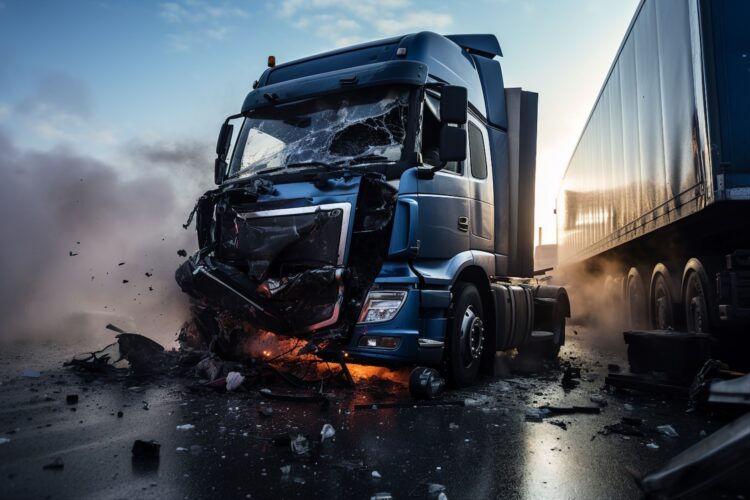 Why Are Truck Accidents Different From Car Accidents?
How commercial truck crashes happen, why the injuries are so severe, and why the federal and California rules that govern the trucking industry demand an attorney who investigates fast, hires the right experts, and prepares every case for trial. Why are truck accidents different from car accidents?
Truck Accidents Are Not Car Accidents: What Our $9,000,000 Settlement Says About Choosing the Right Lawyer
By Pajman Jassim, Principal Trial Attorney at Jassim Law • San Diego, California • November 2026
A fully loaded tractor-trailer can weigh 80,000 pounds. The sedan it strikes weighs about 4,000. When those two vehicles collide, physics does not negotiate. The occupants of the smaller vehicle absorb nearly all of the force, and the result is too often a catastrophic injury or a death.
Jassim Law recently resolved a commercial truck collision case for $9,000,000 on behalf of a couple whose pickup truck was struck nearly head-on by a tractor-trailer that crossed the center line of a two-lane highway in North San Diego County.
Why Are Truck Accidents Different From Car Accidents?
The result was not the product of a quick phone call to an insurance adjuster. It came from a disciplined and swift investigation that secured the truck’s cell phone records and in-cab video, the carrier’s own safety policies, and a case prepared from the outset as though a San Diego jury would decide it.
This article explains why truck accident cases are a different kind of case, and why the lawyer you choose matters more here than in almost any other type of injury claim.
In short, if you or a loved one is involved in a truck accident, you need an experienced and skilled truck accident attorney – not just a typical personal injury or accident attorney. A truck accident is different from a typical car crash in many ways that this article will explain.
How Truck Accidents Happen
Most serious truck crashes are not freak events or “accidents” – they don’t just happen because of bad luck. They are the predictable outcome of a safety rule being broken somewhere in the chain between the trucking company’s dispatch office and the driver’s seat. In our experience, the most common causes include:
- Driver fatigue. Long-haul and regional drivers are paid by the mile or by the load, which creates constant pressure and incentive to keep driving. Federal hours-of-service rules exist precisely because a fatigued driver’s reaction time and judgment degrade in ways that resemble intoxication. There are strict limits on how long a truck driver may drive – because we know that tired drivers are dangerous, and profits over safety is a recipe for disaster.
- Commercial drivers are prohibited from texting or using a hand-held phone while driving, and most carriers have their own written no-phone policies on top of the federal rule. Dispatch messages, navigation systems, and personal phone calls nonetheless remain a leading cause of truck crashes. Driving long hours can be tedious – we have seen cases where drivers are distracted by phones, even watching videos while driving.
- Speeding and following too closely. A loaded truck needs far more distance to stop than a passenger car. A driver who travels at car speeds, or tailgates in traffic, has already given up the margin that a safe stop requires. While the vehicle code relies on the subjective “reasonable and prudent” standard on freeways, the California DMV Commercial Driver Handbook instructs commercial drivers to utilize the time-based method for safety. For a standard 70-foot tractor-trailer at California highway speeds (55 mph), this safety training formula dictates a following cushion of at least 8 seconds under ideal driving conditions
- Improper loading and cargo shift. Overloaded trailers, unbalanced loads, and improperly secured cargo change how a truck handles, cause rollovers, and send cargo into the roadway.
- Poor maintenance. Worn brakes, bald or underinflated tires, defective lights, and faulty coupling systems are among the most frequently cited violations in roadside inspections, and each one can cause or worsen a crash. Truck owners that delay or ignore maintenance for cost savings are putting lives in danger.
- Unqualified or poorly trained drivers. Carriers that cut corners on hiring, background checks, medical certification, and training put drivers on the road who should not be there. Driving a truck is serious business and requires training and skill. Think of driving a tractor-trailer more like flying an airliner. It requires preparation, foresight, patience, and constant focus. Many companies are quick to hire to fill driver roles without sufficient attention to training, experience, and skill.
- Blind spots, wide turns, and lane changes. Trucks have large “no-zones” on all four sides. Right-turn squeezes, unsafe lane changes, and merges into occupied lanes are common causes of collisions with cars, motorcycles, bicyclists, and pedestrians.
- Federal law requires drug and alcohol testing of commercial drivers before hiring, at random, and after certain crashes. When a carrier skips or mishandles testing, impaired drivers stay behind the wheel.
- Jackknifes, rollovers, and underrides. Sudden braking, high-speed curves, and trailers without adequate guards create crash dynamics that simply do not exist in car-versus-car collisions. This is especially a danger during bad weather, rain, snow, wind, etc. Even while under pressure to make deliveries, truck drivers should not be risking extreme weather that unreasonably increases the risk of a collision.
Why Truck Collisions Are Different, and More Serious, Than Car Crashes
Why are truck accidents different from car accidents? The differences are not just a matter of degree. A truck case is structurally different from a car case in at least four ways.
1. The physics are unforgiving
The disparity in mass means that the energy of the collision is transferred almost entirely to the smaller vehicle. Trucks also sit higher off the ground, which allows a passenger vehicle to slide beneath the trailer in an underride crash, and their stopping distances at highway speed are dramatically longer than those of a car. These dynamics produce injuries that are routinely life-altering.
2. There are multiple potential defendants
In a car crash there is usually one at-fault driver and one insurance policy. In a truck crash, responsibility may be shared among the driver, the motor carrier that employed him, a separate owner of the tractor or trailer, the freight broker that selected the carrier, the shipper or loader that packed the cargo, a maintenance contractor, and the manufacturer of a defective component. Each of those parties may have its own insurer, its own lawyers, and its own reasons to point the finger elsewhere. Identifying every responsible party, and the coverage available from each, is one of the first jobs of an experienced truck accident lawyer.
3. The trucking company starts investigating before you leave the hospital
Most carriers and their insurers maintain rapid-response teams that can have an adjuster, a defense attorney, and a reconstruction expert at the scene within hours. They are photographing the scene, interviewing witnesses, and downloading data while the injured person is still in the emergency room. A victim who waits weeks to retain counsel starts the case far behind.
4. The evidence is perishable
A truck generates a trail of electronic and documentary evidence that cars do not: engine control module data, electronic logging device records, GPS and telematics, dash-camera footage, dispatch messages, and driver qualification files. Much of that evidence is routinely overwritten or discarded within weeks or months under the carrier’s ordinary retention practices unless someone acts to preserve it.
Why the Injuries Are So Severe
Because of the forces involved, truck collision victims disproportionately suffer the injuries that medicine can stabilize but rarely reverse:
- Traumatic brain injury, ranging from concussion with lasting cognitive and emotional symptoms to diffuse axonal injury and permanent disability.
- Spinal cord injury, including paraplegia and quadriplegia, and vertebral fractures requiring fusion.
- Crush injuries and traumatic amputation of limbs trapped in a collapsed passenger compartment.
- Internal organ damage and severe burns from fuel fires and hazardous cargo.
- Multiple orthopedic fractures requiring surgery, hardware, and months of rehabilitation.
- Wrongful death, leaving a family to pursue a claim for the loss of a spouse, parent, or child.
These injuries carry lifetime costs: future surgeries, attendant care, home and vehicle modification, lost earning capacity, and the loss of the life the person had before. Properly valuing them requires physicians, life-care planners, vocational experts, and economists, and the discipline to document every element of loss.
The Rules of the Road for Trucks: Why Experience Matters!
Commercial trucking is one of the most heavily regulated industries in the country. The Federal Motor Carrier Safety Regulations (FMCSRs), found in Title 49 of the Code of Federal Regulations, govern nearly every aspect of a carrier’s operation, and California layers its own Vehicle Code provisions, Title 13 regulations, and California Highway Patrol inspection programs on top of them.
A lawyer who does not know these rules, or is trying to learn them on the fly, cannot recognize when they were broken, cannot ask for the right documents, and cannot explain to a jury why the violation matters. Among the regulations that come into play in almost every truck case:
- Hours of service (49 C.F.R. Part 395). Limits on daily driving time, the on-duty window, required rest breaks, and weekly on-duty caps, together with the electronic logging device (ELD) rules that record compliance. Falsified or manipulated logs are a recurring theme in fatigue cases.
- Driver qualification (49 C.F.R. Part 391). Minimum age, experience, medical certification, road tests, and the background and driving-record checks a carrier must perform and document before putting a driver on the road.
- Commercial driver’s licensing (49 C.F.R. Part 383). Licensing, endorsements, and disqualification rules for the driver.
- Drug and alcohol testing (49 C.F.R. Part 382). Pre-employment, random, reasonable-suspicion, and post-accident testing requirements, and the Drug and Alcohol Clearinghouse carriers must query.
- Driving rules (49 C.F.R. Part 392). Prohibitions on hand-held phone use and texting, rules on hazardous conditions, and the requirement that drivers inspect their cargo and equipment.
- Equipment and maintenance (49 C.F.R. Parts 393 and 396). Brake, tire, lighting, and coupling standards; systematic inspection and maintenance programs; and the pre-trip and post-trip inspection reports drivers must complete.
- Financial responsibility (49 C.F.R. Part 387). Minimum insurance levels carriers must maintain, which define the coverage available to compensate victims.
- California law. Lower speed limits for trucks and vehicles towing trailers, following-distance rules, lane restrictions, the CHP’s Basic Inspection of Terminals (BIT) program, and the Vehicle Code provisions that govern every driver on the road.
These rules do more than describe good practice. In California, a violation of a statute or regulation designed to prevent the kind of harm that occurred may establish negligence as a matter of law, and the carrier’s own safety manuals and industry standards become the yardstick by which a jury measures its conduct. Turning a regulatory violation into a persuasive trial theme is a skill that is learned by litigating and trying truck cases, not by reading about them.
Investigation: What an Experienced Truck Accident Lawyer Does in the First Days
The outcome of a truck case is frequently decided in the first thirty days. The steps we take immediately include:
- Preservation demands. A written spoliation letter to the carrier, its insurer, and every other potentially responsible party, identifying the specific evidence that must be preserved and putting them on notice that destruction will have consequences in court.
- Securing the truck and the data. Where the carrier will not agree, we seek a court order to prevent the tractor and trailer from being repaired, sold, or scrapped until our experts can inspect them and download the engine control module, event data recorder, ELD, and telematics data.
- Independent scene work. Our reconstruction experts document the roadway, physical evidence, and sight lines, and we obtain traffic-camera, business-surveillance, and dash-camera footage before it is overwritten.
- Witnesses and first responders. Locating and interviewing witnesses while memories are fresh, and obtaining body-worn camera footage, 911 recordings, and CHP or police investigative files.
- The paper trail. Driver qualification files, hours-of-service records, drug and alcohol testing records, inspection and maintenance logs, dispatch and routing records, bills of lading, weight tickets, and the carrier’s safety audit and compliance history.
- Filing Lawsuit early. A filed lawsuit gives us the power to serve subpoenas, take depositions, and compel the production of documents the carrier would otherwise never hand over voluntarily.
The Right Experts, and the Resources to Hire Them
No lawyer wins a serious truck case alone. The carrier will arrive at mediation and trial with its own reconstructionist, its own trucking-safety consultant, and its own medical experts. Matching and exceeding that effort requires a network of qualified, credible experts and the financial resources to fund them, often well into six figures, long before any recovery is made. Depending on the case, our team may include:
- Accident reconstructionists who analyze crash dynamics, vehicle data, and physical evidence.
- Trucking safety and FMCSR compliance experts, frequently former carrier safety directors or federal investigators, who evaluate the driver’s and the company’s conduct against the regulations and industry standards.
- Human factors experts on perception, reaction time, fatigue, and distraction.
- Biomechanical engineers who explain how the forces of the collision caused the client’s injuries.
- Cargo securement and maintenance specialists for loading and equipment-failure cases.
- Treating physicians, life-care planners, vocational experts, and economists who establish the full measure of medical, functional, and financial loss.
Knowing which experts a case needs, retaining the right ones, and preparing them to withstand cross-examination is a core competency of trial counsel, and one of the clearest differences between a law firm that tries truck cases and one that refers them out or settles them cheaply.
Preparing for Trial from Day One
Trucking companies and their insurers track which plaintiff’s firms actually try cases. Settlement offers reflect that assessment. At Jassim Law, every case is prepared for trial from the day we are retained: we file suit early, take the depositions that lock in the facts, retain and disclose experts on a trial schedule, and build the case around the safety rules the defendants broke. That posture is what produces settlements that reflect the true value of a client’s losses, and it is what allows us to walk into a courtroom when the defense refuses to pay it.
| The $9,000,000 recovery was not the result of a demand letter. It was the result of cell phone records, in-cab video, the carrier’s own safety policy, and two-plus years of litigation, numerous depositions, that left the trucking company and its insurers with a case they did not want to try – and showed that we were ready to take the case to a jury. |
Our $9,000,000 Truck Accident Settlement | Why Are Truck Accidents Different From Car Accidents?
The principles above are not abstractions. They describe how we handled a case that recently resolved for $9,000,000.
The crash. Our clients were driving their pickup truck on a two-lane state highway in North San Diego County. A tractor-trailer traveling in the opposite direction lost control, crossed the double yellow lines and the pylons separating the lanes, and struck them nearly head-on. The impact was so violent that more than a dozen separate 911 calls were made, and responding deputies’ body-worn cameras captured more than fifteen hours of footage of the aftermath.
The injuries. Both clients suffered traumatic brain injuries confirmed by CT and advanced MRI imaging. The husband required a three-level cervical fusion and was left with permanent cognitive, visual, and balance deficits. The wife was found in a ravine by good Samaritans and deputies, was placed in skull traction for two days to prevent paralysis, and underwent an emergency cervical fusion; she faces further spine, wrist, and hip surgery for the rest of her life.
The defense. The truck driver claimed he had to swerve to avoid traffic that stopped suddenly ahead of him. In other words, an unavoidable accident. The trucking company and its insurers stood behind that story, and five layers of insurance coverage meant five sets of adjusters with every incentive to minimize the claim.
How we won it. We did not accept the driver’s account. We subpoenaed his cell phone records, which showed he had been on a personal call for more than two hours, up to the moment of impact. We obtained the truck’s in-cab camera system footage, on which the driver can be heard talking on the phone in the seconds before the crash. We obtained the carrier’s written cell-phone prohibition and the laminated reminder card the company had placed on the driver’s own steering wheel, and took the deposition of the company’s corporate representative, who admitted the rule existed to prevent exactly this kind of distraction. The “sudden stop” defense became what it actually was: a driver who was not keeping a proper lookout or a proper following distance because he was on the phone, in violation of federal regulations and his employer’s own policy.
The result. With liability established and the clients’ injuries documented through their treating neurologists, neurosurgeons, and orthopedic surgeons, we made a written demand, prepared the case for its trial date, and resolved it for $9,000,000.
The trucking company had the resources, the lawyers, and the head start. What it did not have was a case it wanted a San Diego jury to hear.
Injured in a Truck Accident in San Diego? Act Now! Call Jassim Law
If you or a family member has been seriously injured or killed in a collision with a commercial truck, the most important thing you can do is contact an experienced truck accident attorney immediately, before evidence is lost and before you speak with the trucking company’s insurer. Jassim Law represents individuals, never insurance companies, and we handle serious injury cases on a contingency basis: you pay nothing unless we recover for you.
Why Are Truck Accidents Different From Car Accidents?
Call (858) 524-6140 or visit Jassim Law for a free confidential consultation.
Frequently Asked Questions | Why Are Truck Accidents Different From Car Accidents
Attorney Advertising. This article summarizes publicly reported information and is for general informational purposes only; it is not legal advice and does not create an attorney-client relationship. Details may change as the investigation continues. Prior results do not guarantee a similar outcome.
Attorneys
JASSIM LAW
- Top 10.00 Avvo-rated attorney
- San Diego’s Best Attorneys
- Super Lawyers
- Member of San Diego, Los Angeles and Orange county bar associations