
When a Child Is Hurt at School, at Practice, or at Play: A Parent’s Guide to Who Is Responsible and What to Do
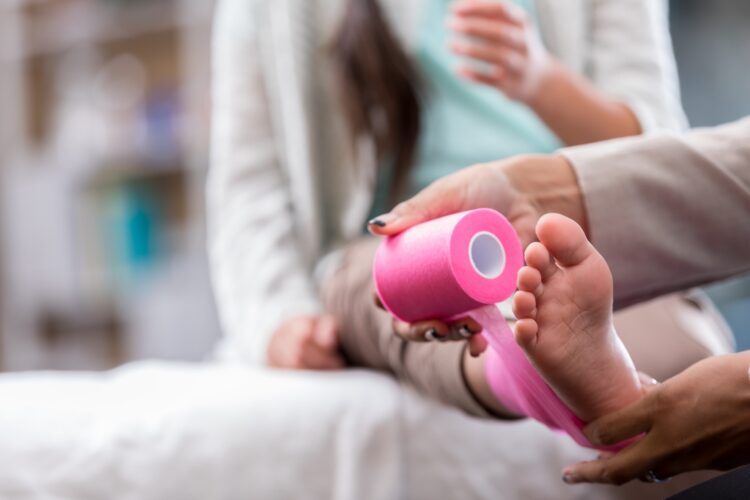 Child Injured at School or Playing Sports in California? Know Your Legal Rights
The laws that make schools, leagues, and recreation programs accountable; why head injuries in children are different; what the waiver you signed actually means; and the ten things to do in the first days after an injury. Learn more from a trusted child injury lawyer in San Diego.
By Pajman Jassim and Parisima Jassim | Jassim Law | San Diego’s Trusted Child Injury Trial Lawyers
Every parent who drops a child off at school, at practice, or at a birthday party is trusting someone else to keep that child safe. Most of the time the trust is well placed. When it is not — when a coach steps away, a weight room goes unsupervised, a trampoline park cuts corners, or an adult swings a bat toward a group of eight-year-olds — the question becomes who is responsible, and what a family can do about it.
We are San Diego trial lawyers who represent seriously injured children and their families, and we are parents. We have handled school injury cases against public school districts and private schools, youth sports cases against leagues and coaches, and recreation cases against commercial operators. We wrote this guide for the parent who is sitting in an emergency room, or at a kitchen table a week later, trying to understand what happened and what comes next.
Learn More from a Trusted Child Injury Lawyer in San Diego
This article is general information about California law as of October 2026, not legal advice. Claims against public schools have short, unforgiving deadlines as little as six months. If your child has been seriously injured, talk to a lawyer promptly.
Part One: Three Cases That Show How These Injuries Happen
The injuries we see in school and youth sports cases are rarely the result of bad luck. They are almost always the result of an adult failing to do something that adult was supposed to do – because injuries to children are nearly always foreseeable risks that can be prevented. Three of our own cases illustrate the pattern.
- $925,000 — the unsupervised weight room. A high school student athlete was left alone in a school weight room and attempted to leg press 720 pounds with no spotter and no teacher/coach present. The weight came down on him and broke his spine. The school district’s defense was that he chose to lift the weight. Our position was simpler: a school that puts a teenager in a room with a machine capable of crushing him has a duty to be in that room. The district settled for $925,000.
- $1,000,000 — the adult coach and the baseball. An eight-year-old Little League player was struck in the head by a baseball hit by an adult coach during practice. The league’s position was that getting hit by a ball is an inherent risk of baseball. For a player, in a game, it may be when playing against kids of similar age, size, and skill. For an eight-year-old standing where an adult chose to hit a ball toward him, it is not. The case settled for $1,000,000 against the Little League.
- $495,000 — the trampoline and the prior brain injury. A child with a pre-existing traumatic brain injury fell at a trampoline facility and suffered a second head injury. The defense argued that the child’s problems pre-dated the fall and they were not negligent. California law is clear that a defendant takes the injured person as it finds them, and that aggravating an existing condition is compensable. The case settled for $495,000.
Every case is different, and prior results do not guarantee a similar outcome. These results reflect the specific facts, injuries, and insurance coverage in each matter.
Notice what the three have in common. In each, the responsible adult or organization had a defense that sounded reasonable at first he chose to lift it, baseball is dangerous, the child was already hurt and in each, the defense did not survive a careful look at what the law actually requires. This is why it is important to retain a trusted child injury lawyer in San Diego can help if your child is injured.
Part Two: Why Head Injuries in Children Are Different
Most of the serious school and sports cases we handle involve the head. That is not a coincidence.
- The CDC reports that roughly seven out of ten emergency department visits for sports- and recreation-related traumatic brain injuries and concussions are among children 17 and under. Contact sports — football, basketball, soccer — account for nearly half of those visits in that age group, with bicycling and playground activities contributing substantially as well.
CDC HEADS UP, “Data on Sports and Recreation Activities” (cdc.gov/heads-up/data).
- A child’s brain is still developing, and the skull, neck muscles, and blood vessels are not those of an adult. The same impact that produces a headache in a grown athlete can produce a bleed, a longer recovery, or lasting cognitive and emotional effects in a nine-year-old.
- A second head injury before the first has healed — sometimes called second-impact syndrome can be catastrophic. This is why return-to-play decisions matter so much, and why a child with any prior head injury, like our trampoline client, is at heightened risk from an impact that would be minor for someone else.
- Symptoms are frequently delayed and frequently missed. A child who “seems fine” on the field may be vomiting that evening, struggling in class the next week, and withdrawn a month later. Teachers and coaches are not trained diagnosticians; parents must be the ones who insist on evaluation.
California has recognized this in its own law. Education Code section 49475 requires that a student athlete suspected of sustaining a concussion be immediately removed from the activity for the remainder of the day and not returned until evaluated and cleared in writing by a licensed health care provider, and requires annual concussion information sheets signed by the athlete and a parent. A school that ignores that rule is not merely careless; it is violating a statute written for exactly this situation.
Part Three: Who Is Responsible | The Laws That Make Schools, Leagues, and Programs Liable
Parents often assume that a school or a league is immune, or that nothing can be done because “kids get hurt.” Neither is true. The law differs depending on who was responsible for the child, so it helps to take them one at a time.
Public schools and school districts
- Schools must supervise. California courts have held for decades that a school district owes a duty to supervise students at all times while on school grounds and during school-sponsored activities, and that the standard is the care a reasonably prudent person would exercise under the same circumstances. The duty is not limited to the classroom; it extends to physical education, athletics, weight rooms, playgrounds, and field trips. An unsupervised weight room with a 720-pound load on the sled is the clearest possible example of that duty being breached.
See Dailey v. Los Angeles Unified School District (1970) 2 Cal.3d 741; Education Code section 44807; and the line of cases following them. Verify current citations before publication.
- Districts are liable for their employees. Under Government Code section 815.2, a public entity is liable for injuries caused by the negligent acts or omissions of its employees within the scope of employment. The coach, the teacher, the aide, and the campus supervisor are all employees; their negligence is the district’s negligence.
- Dangerous conditions of public property. Government Code section 835 makes a public entity liable for a dangerous condition of its property — a broken bleacher, an unguarded drop-off, defective playground equipment, a weight machine without safety stops — when the entity knew or should have known of it and had time to fix it.
- The six-month trap. Claims against a public school district or other public entity must be presented in writing under the Government Claims Act, generally within six months of the injury (Government Code sections 905, 911.2). A minor’s age does not extend that deadline the way it extends ordinary limitations periods. Families who wait for the school to “do the right thing” routinely lose their claims entirely. This is the single most important reason to talk to a lawyer early.
Private schools
Private schools are not protected by the Government Claims Act and are sued like any other business, under ordinary negligence principles (Civil Code section 1714). The duty to supervise is the same or greater, and private schools often have enrollment agreements with their own notice, arbitration, or waiver provisions that need to be read carefully — more on waivers below.
Youth Sports Leagues, Coaches, and Camps
- The “inherent risk” defense and its limits. California applies a doctrine called primary assumption of risk to sports: a participant cannot sue for injuries caused by risks inherent in the sport itself. A pitcher is not liable for hitting a batter; a linebacker is not liable for a hard tackle. But the doctrine protects only the risks that are part of the game. It does not protect a coach or organization that increases the risks beyond what the sport requires, that acts recklessly, or that fails in its own separate duties of supervision, instruction, and equipment.
Knight v. Jewett (1992) 3 Cal.4th 296; Kahn v. East Side Union High School District (2003) 31 Cal.4th 990; Avila v. Citrus Community College District (2006) 38 Cal.4th 148.
- Coaches are held to a real standard. In Kahn, the California Supreme Court held that a coach may be liable for pushing an athlete beyond her abilities or for instruction that is reckless or wholly outside the range of ordinary coaching conduct. An adult who hits a baseball at an eight-year-old is not coaching baseball; he is creating a danger the game does not require. Often, these things happen not because the coach or teach is a “bad” person, it happens because they are a volunteer that was not adequately trained about such dangers – a systemic failure.
- Organizations are responsible for their volunteers. Leagues, clubs, and camps are generally liable for the negligence of their coaches and volunteers acting within the scope of their roles, and are separately liable for their own failures — inadequate background checks, untrained coaches, no safety rules, no concussion protocol, unsafe fields or equipment. These failures are often a recipe for disaster.
- Statutory concussion duties extend to youth sports. California’s youth sports concussion law (Health and Safety Code section 124235) requires youth sports organizations to remove an athlete suspected of a concussion, to require written medical clearance before return, to provide concussion information to parents, and to train coaches. A league that has no protocol is exposed.
Trampoline parks, gyms, and commercial recreation
Commercial operators owe their paying customers — including children — a duty of reasonable care in the design, maintenance, staffing, and supervision of their facilities. Trampoline parks in particular have a documented injury record and are frequently understaffed. They nearly always require a signed waiver, which brings us to the question every parent asks.
Part Four: The Waiver You Signed | What It Does and Does Not Do
Almost every youth sports registration, camp enrollment, and trampoline-park check-in includes a release of liability. Parents sign them without reading them, and then, after an injury, assume the matter is closed. It frequently is not.
What a Waiver Can Do
California generally enforces a clearly written release of liability for ordinary negligence in recreational activities, and courts have held that a parent may sign such a release on behalf of a minor child for school-sponsored and recreational activities. So a well-drafted waiver can bar a claim that a coach was merely careless in the ordinary sense.
Hohe v. San Diego Unified School District (1990) 224 Cal.App.3d 1559.
When a Waiver Does Not Apply | Trusted Child Injury Lawyer in San Diego
- Gross negligence. The California Supreme Court has held that a release cannot waive liability for gross negligence — an extreme departure from the ordinary standard of care. Leaving a teenager alone with a 720-pound leg press, or running a trampoline park with no trained staff on the floor, is the kind of conduct that may rise to that level.
City of Santa Barbara v. Superior Court (2007) 41 Cal.4th 747.
- Intentional or reckless conduct. No release covers an intentional act, and conduct that is reckless rather than merely careless generally falls outside a release as well.
- Violation of a statute. Civil Code section 1668 voids any contract that purports to exempt a party from liability for its own violation of law. A failure to follow the concussion statutes described above is a violation of law.
- The waiver is unclear, buried, or too broad. A release must be clear, unambiguous, and explicit about what it covers. Releases that are printed in tiny type, hidden in an online checkbox, or that do not plainly mention the risk that caused the injury are routinely held unenforceable.
- The injury is outside the activity the waiver covers. A release for “participation in baseball” does not necessarily release a league for an adult coach’s conduct that is not part of baseball.
- Public policy. Releases of services affecting the public interest can be void under the Tunkl doctrine. Courts have been reluctant to extend this to voluntary recreation, but the argument is strongest where the activity is compulsory, such as a required physical education class.
- Nobody with authority signed it. A release signed by a grandparent, a babysitter, or the child alone generally does not bind the parent or the child.
The practical point: a signed waiver is the beginning of the analysis, not the end. Do not let a league or a facility tell you otherwise, and do not decide on your own that it bars your child’s claim. Send it to a lawyer and let the lawyer tell you. This is precisely why at Jassim Law a trusted child injury lawyer in San Diego we always give free unlimited time consultations it is what our community deserves and should expect.
Part Five: Ten Things to Do After a Child Is Injured at School, at Practice, or at Play
What a family does in the first days shapes everything that follows medically and legally according to Pajman Jassim a trusted child injury lawyer in San Diego.
- Get medical care immediately, and insist on a head evaluation if there was any impact. Describe every symptom. Follow up with the pediatrician in the following days even if the emergency visit was unremarkable. Concussion symptoms often appear late.
- Get the written incident report, and do not rely on the verbal account. Schools and leagues are required or expected to document injuries. Ask for a copy the same day, and ask who prepared it. If they refuse, note the refusal in writing. Identify the employees/volunteers present. Document the location, time, and nature of incident.
- Write down what your child tells you, in their words, the same day. Children’s memories are especially vulnerable to suggestion. A contemporaneous account is powerful; one reconstructed weeks later is not.
- Identify every adult who was — or should have been — present. Who was supervising, where were they, and who was in charge? The answer to “where was the coach” decided our weight-room case.
- Identify the other children who saw it and their parents. Other kids are often the only witnesses. Get names and parent contact information now, politely, before the school or league decides who may talk to whom.
- Photograph the location and any equipment, as soon as possible. The machine, the field, the trampoline, the bleacher, the playground surface, the missing padding. Facilities fix things quickly after an injury; the photographs preserve what it looked like that day.
- Ask whether there is video, and ask for it to be preserved — in writing. Schools, gyms, and parks have cameras. Send a short email the same week asking that all footage of the incident be preserved. Most systems overwrite within days.
- Keep every document. The waiver, the registration form, the enrollment agreement, the concussion information sheet, the team roster, the practice schedule, emails with the coach, and every medical bill and record.
- Do not give a recorded statement to the school’s or league’s insurer, and do not sign anything new. You will likely be contacted by a claims adjuster who is friendly and sympathetic. Their job is to limit what the insurer pays. Take their information and tell them your lawyer will be in touch.
- Talk to a lawyer who handles child injury cases — quickly. If a public school is involved, the clock may already be running on a six-month claims deadline. Even if it is not, the evidence that proves these cases disappears fast.
Part Six: Why Experience in Child Injury Cases Matters | Child Injury Lawyer in San Diego
Child injury cases against schools and youth organizations are not ordinary personal injury cases, and a lawyer who handles mostly car crashes will likely miss things. A few examples:
- The Government Claims Act. A claim against a public school that is late, incomplete, or presented to the wrong entity is lost, permanently. The rules are technical and the exceptions are narrow. We file claims early and correctly, and we sue early rather than waiting for the district to respond.
- Assumption of risk and waiver defenses. These defenses are raised in nearly every youth sports case, and defeating them requires knowing the case law — Knight, Kahn, Avila, City of Santa Barbara — and building the factual record of gross negligence or increased risk that takes the case outside them. That record is built through depositions of the coaches, administrators, and league officials, not through letters to an adjuster.
- Pre-existing conditions. Children with prior injuries, learning differences, or medical conditions are routinely told their new injury “was already there.” California law allows full recovery for aggravation of a pre-existing condition, but proving it requires the right medical experts — pediatric neurologists and neuropsychologists who can separate before from after. Our trampoline case was won on exactly that work.
- Proving a child’s damages. A child’s injury is measured over a lifetime: future education, future earning capacity, future care. That requires life-care planners, vocational experts, and economists, and it requires a lawyer willing to invest in the case rather than settle it for the first offer.
- Court approval of the settlement. Any settlement of a minor’s claim must be approved by the court through a minor’s compromise petition, and the money must be protected — typically through a blocked account or a structured settlement — until the child is an adult. We handle this as part of every child case.
Our firm is selective about our cases by design. This is not because we believe some cases do not deserve quality representation, we accept fewer cases so that each one is prepared for trial from the start, and the cases we accept are personally handled by the attorneys, not “case managers” or paralegals. That is how a case the school district called a teenager’s own fault became a $925,000 settlement, and how a league’s “inherent risk” defense became a $1,000,000 recovery for an eight-year-old.
The Bottom Line | Act Now! Call an Experienced Child Injury Lawyer San Diego
Schools, leagues, and recreation businesses are not immune when a child is hurt on their watch, and the waiver in the registration packet is not the last word. But the deadlines are short, the defenses are real, and the evidence is perishable. If your child has been seriously injured at school, at practice, or at a recreational facility, get medical care first, preserve what you can, and call a lawyer who handles these cases before you talk to the other side’s insurance company.
Child Injury Lawyer San Diego | Free Consultation
We are glad to talk with you. The consultation is free, and there is no fee unless we recover for your child. Serving San Diego and Southern California.
Jassim Law is a San Diego personal injury trial firm focused on serious and catastrophic injury cases, including injuries to children at school, in youth sports, and at recreational facilities. Pajman Jassim and Parisima Jassim have been recognized by Super Lawyers and hold 10.0 Avvo ratings. This article is for general informational purposes and does not create an attorney-client relationship. Prior results do not guarantee a similar outcome.
Attorneys
JASSIM LAW
- Top 10.00 Avvo-rated attorney
- San Diego’s Best Attorneys
- Super Lawyers
- Member of San Diego, Los Angeles and Orange county bar associations