
Woman Killed While Stopped at Grand and Mission in Pacific Beach; Driver Arrested on Suspicion of DUI
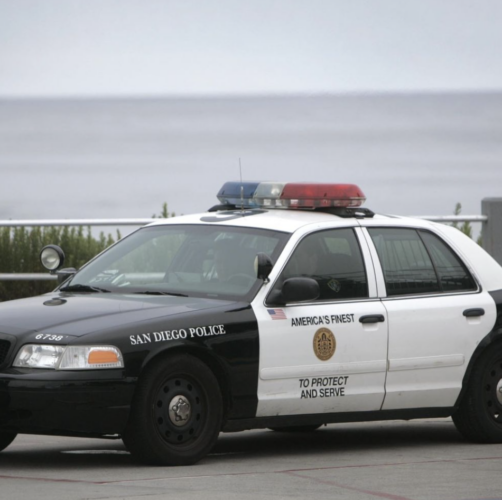 Pacific Beach Fatal DUI Crash
At about 6:20 on Thursday morning, November 5, 2026, a 59-year-old woman was stopped in her Toyota Camry on westbound Grand Avenue in Pacific Beach, waiting to turn right onto Mission Boulevard. She was struck in the driver’s door by a car that police say was traveling at a high rate of speed. She was taken to a hospital, where she died. The other driver has been arrested on suspicion of driving under the influence. Learn more about the Pacific Beach fatal crash.
Jassim Law | November 5, 2026 | San Diego Car Accidents, DUI Collisions, Wrongful Death
Our thoughts are with her family and friends, and with everyone who was at the scene.
What Has Been Reported
The following comes from San Diego Police Department information reported by FOX 5 San Diego and NBC 7 San Diego.
- The vehicles. A 41-year-old man was driving a 2014 Ford Fusion north on Mission Boulevard at what police described as a high rate of speed. The Camry was stopped on westbound Grand Avenue, preparing to turn right.
- The impact. For reasons police say are still under investigation, the Ford veered to the right and struck the driver’s side door of the Camry.
- The arrest. The Ford’s driver was arrested on suspicion of DUI. No test results have been reported, and an arrest is not a conviction.
- Police have not given a figure. A witness told NBC 7 the Ford was traveling at “freeway speeds” and estimated 60 miles per hour or more.
- The closures. Grand Avenue between Ocean Boulevard and Bayard Street, and Mission Boulevard between Hornblend Street and Thomas Avenue, were closed for several hours and have since reopened.
- What is not yet public. The woman’s name, whether the Ford’s driver was injured, and why the Ford left its path. The SDPD Traffic Division is investigating. Anyone with information can call Crime Stoppers at 888-580-8477.
This Was Not a Typical Crash
Most collisions come down to a moment of inattention: a missed signal, a glance at a phone, a misjudged gap. This one, as police describe it, was different. A woman was sitting still at an intersection, doing nothing wrong, shortly after six in the morning. On the facts reported, there was nothing she could have done to avoid it.
If the allegations are proven, this was not an accident in any ordinary sense. A person who drives impaired and at high speed through a beach neighborhood has made a series of choices, and the tragedy was in motion long before the two vehicles met.
How Did This Driver End Up Behind the Wheel?
In a case with these reported facts, we would not stop at the intersection. We would work backward through the night before the collision.
- Where had the driver been in the hours before 6:20 a.m., and with whom?
- If he was impaired, by what? What did the people around him see, and did anyone try to stop him or take his keys?
- Did anyone call 911 to report the vehicle before the crash?
- Whose car was it? If it belonged to someone else, what did the owner know about the driver’s condition, license status, or driving history before handing over the keys?
- Was the driver working at the time, or driving for an employer or a delivery or rideshare platform?
- Does the driver have prior DUI arrests or convictions, a suspended license, or a court-ordered ignition interlock?
Behind all of these is a harder question: could anyone have stopped this? Sometimes the answer is no. Sometimes the evidence shows that someone else had the opportunity and the legal responsibility to keep a dangerous driver off the road. Those answers matter to a family that wants to understand what happened. As explained below, they can also determine whether there is any meaningful recovery at all.
The Insurance Problem in Cases Like This
There is a hard reality in many of the worst collisions: the drivers who cause the most harm often carry the least insurance. California’s minimum liability coverage is $30,000 per person and $60,000 per collision. In a fatal case, that does not begin to account for the loss. We do not know what coverage the driver arrested here carries. But where an at-fault driver’s coverage is inadequate, a family’s recovery depends on finding every other source:
- The family’s own policy. Uninsured and underinsured motorist coverage on the victim’s own auto policy, or a household member’s, can apply. (Ins. Code, § 11580.2.) Many people do not know they have it.
- The vehicle’s owner. An owner who lets someone else drive is liable by statute up to limited amounts (Veh. Code, §§ 17150, 17151), and without that cap if the owner knew or should have known the driver was unfit.
- An employer. If the driver was on the job, the employer and its insurance may be responsible.
- The driver personally. Policy limits are not always the ceiling. In one of our cases, the defendant driver paid personally above a $250,000 policy, and the City of San Diego contributed for a dangerous intersection, for a total of $400,000.
- Public entities. If the design or condition of the roadway or intersection contributed.
None of these sources is found by accepting the first insurance company’s letter. They are found by investigating.
Why the First Account Is Rarely the Whole Story
In more than two decades of representing injured people and families in San Diego, we have seen early narratives change in both directions once the evidence is gathered. This case has already shown it. In the first hours, a witness at the scene wondered aloud whether the Toyota had run a red light. Police have since reported that she was stopped.
In one of our cases, the defense claimed our client, a motorcyclist, had been speeding. Police body-camera footage, depositions of the witnesses and officers, and accident reconstruction experts rebutted that claim, and the case settled for $8,250,000. In another, a wrongful death case with no eyewitnesses, the police report blamed our client for the collision. That case settled for $1,370,000.
The lesson is not that witnesses or police reports are wrong. It is that fault in a serious collision is established by physical evidence, and that evidence has to be secured before it is gone.
The Evidence That Decides a Case Like This
- Grand Avenue and Mission Boulevard are lined with businesses, and many have exterior cameras. Private systems often record over their footage within days or weeks. In a prior case, we subpoenaed street light video from the City of San Diego and used it to establish what happened.
- Vehicle data. Most modern vehicles carry an event data recorder that captures speed, braking, and throttle in the seconds before impact. That data can be lost if a vehicle is repaired, released, or sold for salvage.
- Signal records. When a red light is in question, traffic signal timing and phase records can show what each driver was facing.
- Names and contact information need to be collected early. Memories fade and people move.
- Blood and breath test results from the police investigation and, in a fatal case, the Medical Examiner’s findings.
- The hours before. 911 recordings, receipts and card records, phone records, and surveillance video from wherever the driver had been.
- Police evidence. Body-worn camera footage, scene photographs, measurements, and the traffic collision report. Investigations of fatal collisions can take weeks or months to complete.
Much of this evidence can only be compelled by subpoena, and a subpoena requires a filed lawsuit. That is one reason our firm files suit early instead of waiting on an insurance company’s investigation.
What California Law Says | Pacific Beach Fatal Crash
Speed. California’s basic speed law prohibits driving faster than is reasonable or prudent for the conditions, and never at a speed that endangers people or property. (Veh. Code, § 22350.) A posted limit is a ceiling, not a guarantee that a given speed was safe.
Shared fault. California follows pure comparative fault. (Li v. Yellow Cab Co. (1975) 13 Cal.3d 804.) Responsibility is divided by percentage among everyone who contributed to the harm, which is why identifying every responsible person and entity matters.
Impaired driving and punitive damages. When a person chooses to drive while intoxicated, knowing the danger to others, a jury may award punitive damages in addition to compensation. (Civ. Code, § 3294; Taylor v. Superior Court (1979) 24 Cal.3d 890.) Evidence of prior DUI history bears directly on that question. Insurance generally does not pay punitive damages.
Who served the driver. People often assume a bar or host that over-served a driver is responsible. In California, for the most part, it is not. The law treats the drinking, not the serving, as the cause of the harm. (Civ. Code, § 1714, subds. (b), (c); Bus. & Prof. Code, § 25602.) There are narrow exceptions when alcohol is furnished to a minor. (Bus. & Prof. Code, § 25602.1; Civ. Code, § 1714, subd. (d).) That is one reason the questions about the vehicle’s owner and the driver’s employer matter so much.
The criminal case. A criminal prosecution and a civil case are separate. The District Attorney decides whether to file charges; the family is not a party to that case, though victims have rights in it, including restitution. A civil case does not have to wait for the criminal case to finish, and the evidence that matters to the family is often gathered only in the civil case.
Wrongful death. When a person is killed by another’s wrongful act or neglect, the surviving spouse or domestic partner, children, and certain other family members may bring a wrongful death action. (Code Civ. Proc., § 377.60.) Recoverable losses include financial support the person would have provided, the loss of love, companionship, comfort, and care, and funeral and burial expenses. A separate survival claim may be brought on behalf of the estate. (Code Civ. Proc., § 377.30.)
Deadlines. The general deadline to file a wrongful death lawsuit in California is two years. (Code Civ. Proc., § 335.1.) If a public entity may share responsibility, for example because of a dangerous roadway condition, a written government claim generally must be presented within six months. (Gov. Code, § 911.2.) Exceptions apply, and the deadline in any particular case should be confirmed with an attorney.
If Your Family Has Been Affected by a Fatal Collision
- Do not give a recorded statement to any insurance company before getting legal advice.
- Ask that the vehicle be preserved. Do not authorize repair, release, or disposal.
- Keep phones, photographs, and any messages from the day of the collision.
- Write down the names of anyone who saw what happened or spoke with police.
- Stay off social media about the collision.
- Speak with more than one attorney, and ask each whether they will file suit and are prepared to try the case.
How Jassim Law Handles These Cases like this Pacific Beach Fatal Crash
Cases like this are not resolved by a phone call to an adjuster. Jassim Law is a San Diego trial firm. We take a limited number of serious injury and wrongful death cases and prepare each one for trial from the first day. We file suit early so that we can subpoena video, take depositions, and obtain police body-camera footage while the evidence still exists.
Pacific Beach Fatal Crash
If you have questions after a serious collision, we offer a free, confidential consultation.
Jassim Law | 16885 Via Del Campo Ct., Suite 324, San Diego, CA 92127 | 24/7 • (858) 524-6140 | Jassim Law
Attorney Advertising. This post is based on public news reporting as of November 5, 2026. The investigation is ongoing and the facts may change. The driver described has been arrested, not convicted, and is presumed innocent in any criminal proceeding. It is general information, not legal advice, and reading it does not create an attorney-client relationship. It is not directed to any person involved in this collision or to their families. The results described depended on the facts of those cases and do not guarantee or predict the outcome of any other matter.
Sources: FOX 5 San Diego, “Fatal crash prompts closure along two busy Pacific Beach streets” (Nov. 5, 2026); NBC 7 San Diego, “Deadly Pacific Beach crash shuts down major streets” (Nov. 5, 2026).
Attorneys
JASSIM LAW
- Top 10.00 Avvo-rated attorney
- San Diego’s Best Attorneys
- Super Lawyers
- Member of San Diego, Los Angeles and Orange county bar associations