
Kids and E-Bikes: A Parent’s Guide to Letting Them Ride Without Ending Up in the Trauma Bay
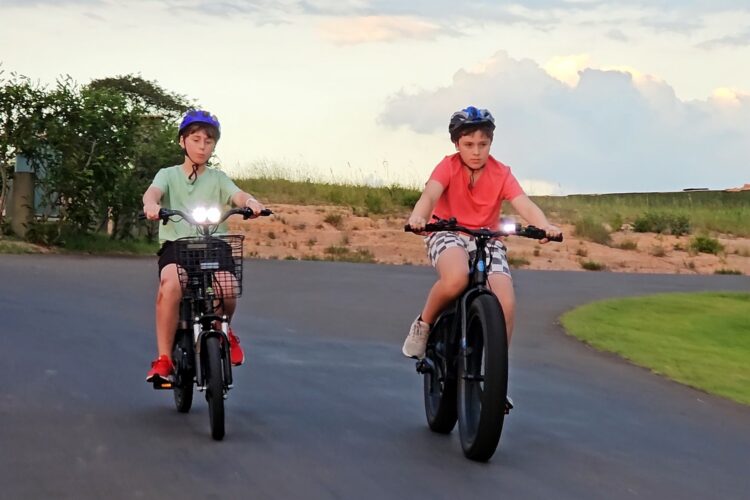
E-Bike Safety for Kids in California
Why e-bike crashes are different, the rules that actually reduce risk, the ten things to do after a crash, and how to protect your family if your child injures someone else. Learn more about e-bike safety for kids in California.
By Pajman Jassim and Parisima Jassim | Jassim Law | E-Bike | Bicycle | Motorcycle | Pedestrian | San Diego’s Trusted Injury Trial Lawyers
We are San Diego personal injury trial lawyers, and we are parents of kids at a school where e-bikes are everywhere. E-bike, bicycle, motorcycle, and pedestrian collisions are the core of our practice — the cases where a vulnerable road user meets a car or truck, the injuries are catastrophic, and the driver’s insurer says it was the rider’s fault. We have represented e-bike riders as young as 12 and as old as 86, and we have sat across from families whose lives were changed in the time it takes to make a right turn.
We are not anti–e-bike. E-bikes give kids real independence, get cars off the road, and are, frankly, fun. The question is not necessarily whether to allow them, that is often a personal and family decision. Our aim is to help our community use them without the trauma-center visit.
This guide is written for the parents who want to know how to let my kid ride an e-bike safely. It is organized in four parts: why these crashes are different, what rules actually reduce risk, what to do in the first 72 hours after a crash, and how to protect your family if your child is the one who injures someone.
This article is general information, not legal advice. Laws vary by state and city and change frequently; the legal references below are to California law as of October 2026. If your child has been injured, or has injured someone, talk to a lawyer about your specific situation. We are here to assist and consult free of charge.
Part One: Why E-Bike Crashes Are Different
Some parents tend to file e-bikes mentally next to bicycles. The physicians who treat the injuries file them next to motorcycles. The difference is speed and mass, and the numbers from San Diego’s pediatric trauma center show what that difference does.
- Rady Children’s Hospital San Diego saw three pediatric trauma patients tied to e-bikes in 2021. In the first quarter of 2026 alone it saw nearly 90, putting e-bikes on pace to be the single most common cause of childhood trauma at the hospital this year. The trauma medical director describes skull fractures, brain bleeds, and spine fractures — injuries he compares to motorcycle and low-speed car crashes.
Axios San Diego, May 21, 2026, reporting on Rady Children’s trauma data (Dr. Romeo Ignacio).
- Rady recorded 262 e-bike trauma activations in 2025 — a record, compared with none five years earlier. The County’s public health officer has noted the true number is likely higher because many e-bike injuries are logged as ordinary bicycle injuries.
NBC 7 San Diego and CBS 8, June 2026.
- A study of 338 pediatric e-bike and pedal-bike trauma cases at a San Diego Level 1 center, presented to the American Academy of Orthopaedic Surgeons in March 2026, found a more than 300% rise in pediatric e-bike crashes between 2019 and 2023, with injuries that typically require surgery, hospitalization, and rehabilitation.
AAOS 2026 Annual Meeting, March 2, 2026 (Rady Children’s / UC San Diego).
- A national pediatric study led by Rady Children’s Health Orange County, published in February 2026, was the first to look at speed as a factor in child and teen e-bike injuries. It highlights the sharply elevated risk above 20 mph and the central role of head injury.
Rady Children’s Health Orange County, February 6, 2026.
- Nationally, a JAMA Network Open study reported e-bike injuries rising from 751 in 2017 to 23,493 in 2022. (Journal of the American Medical Association).
JAMA Network Open, 2024.
Here is what those numbers look like in practice. In the cases we handle, the same bike lane, the same driveway, and the same right turn that produce a scraped knee at 10 mph produce a skull fracture at 20 mph. Three crash patterns account for most of the serious injuries we see:
- The right hook. A driver turns right across a bike lane into a driveway or side street without seeing the rider, who is closing at a speed the driver never anticipated. One of our clients, a young woman riding in a marked bike lane without a helmet, suffered a traumatic brain injury this way when a truck turned into a driveway across her path. We filed suit immediately rather than waiting on the insurer, and the case resolved for $2,250,000. No settlement gives back what she lost — but the early filing is what secured the evidence while it still existed. Initially, the police and the other driver blamed our client.
- The blocked bike lane. A landscape, pool, or delivery truck parks in the bike lane creating an obstacle for the bicycle using the bike lane on a busy street with fast moving cars. The rider swerves into the traffic lane and is hit from behind. We represented the family of a rider killed exactly this way. There were no witnesses, and the police report blamed the bicycle rider for swerving. The insurer treated the report as the end of the case. We did not. The physical evidence, properly worked up, told a different story, and the case resolved for $1,370,000 — but the point for parents is that a parked truck killed him. This scenario is all to common and avoidable if we teach riders to anticipate such obstacles, and the best way to handle them.
- Loss of control. Two kids on one bike, a throttle twisted at a stop, a phone in one hand, a curb taken at 20 mph. No car involved; a child alone in the road.
Every one of those crashes was preventable. That is the good news, and it is the reason this guide exists.
Part Two: The Rules That Actually Reduce Risk
First, know what your child is riding
California — like most states — sorts e-bikes into three classes, and the class matters more than most parents realize:
- Class 1: pedal-assist only, motor cuts out at 20 mph. No throttle.
- Class 2: has a throttle; the bike moves without pedaling, motor cuts out at 20 mph.
- Class 3: pedal-assist up to 28 mph. California law requires Class 3 riders to be at least 16 and to wear a helmet at any age.
Under California law, every rider under 18 must wear a helmet on any bicycle or e-bike. Regardless of the law, we strongly believe that every rider, regardless of age should use the correct helmets (and actually strapping the helmet correctly), and safety gear. For example, light colored and reflective clothes, lights at night, the appropriate shoes, and clothing.
There is no statewide minimum age for Class 1 or 2, which is why a growing number of San Diego County cities — the City of San Diego, Carlsbad, Encinitas, Oceanside, and others — have adopted local ordinances barring children under 12 from riding them, some with authority to impound a minor’s e-bike. Check your city’s rules; they are changing month to month.
Two other things to check on the bike itself. Since January 1, 2026, e-bikes sold in California must carry a label showing their class, top assisted speed, and motor wattage, and their batteries must be certified to recognized safety standards (SB 1271). If the bike has no label, or has been modified to exceed 750 watts or its class speed, it is not legally an e-bike at all. It is an unregistered motor vehicle, your child cannot lawfully ride it on the street, and it may fall outside your insurance. The so-called “off-road” or “moped-style” electric bikes sold online to teenagers frequently fall into this category.
Our Recommended Parameters | E-Bike Safety for Kids in California
These are the rules we would set in our own house, and that we would ask any parent to consider before the first ride.
- Buy the right class. Class 1 for younger and newer riders. No throttle until your child has demonstrated competence on a conventional bike at speed. No Class 3 for anyone under 16 — it is the law — and we would not recommend it for most teenagers at all.
- Set the speed limit on the bike. Most e-bikes allow the owner to cap the assist speed in the app or on the display. Set it below the maximum — 15 mph for a middle schooler is reasonable — and check periodically that it has not been changed. Speed-unlock apps and devices are now restricted in California, but they still exist.
- Helmet on, buckled, every ride. A certified helmet that fits, replaced after any impact. The Rady physicians are seeing skull fractures, not just concussions. Consider a helmet with rotational-impact protection (MIPS or equivalent).
- Be seen. Front and rear lights on at all times, including daytime. Drivers scanning for bicycles are not expecting a bicycle-sized object closing at 20 mph. Bright colored and reflective clothing, and lights. Look at the other motorists and anticipate what they are doing, and anticipate that they may not be seeing you.
- One rider per bike. No exceptions. Passengers are the fastest way to lose control and are not permitted on most bikes by design.
- No phone in hand, no headphones. A mounted phone for navigation is fine. Anything else is not. No music, air pods, etc. The rider must be able to hear and use their full senses while out on the busy roads.
- Ride the route with them first. Once, on the actual route, at the actual time of day. Find the driveways, the blind right turns, the places where the bike lane ends, and agree on how to handle each one. In other words, help your child identify dangerous conditions they may not identify on their own.
- Put it in writing. A short family riding agreement — helmet, no passengers, no phone, lights on, agreed routes, no night riding, and the consequence for breaking it. Teenagers follow rules they helped write far better than rules announced at them. A contract with consequences helps define the rules, expectations, and consequences of breaching your family agreement. It sets parameters and expectations.
- Take the class. Many San Diego school districts, including San Dieguito, Carlsbad, and Encinitas, now require a bike safety course before a student can bring a bike to campus, and the city police departments and the San Diego County Bicycle Coalition run free sessions. A free online e-bike course endorsed by the California Highway Patrol is also available. Take it even if the school does not require it.
- Add a camera. An inexpensive handlebar or helmet camera settles fault disputes that otherwise come down to a driver’s word against a teenagers. In almost every crash we see, the bicyclist may be taken from the scene by an ambulance while the at-fault driver gives a self-serving statement to police. It is unfair, but it happens. A camera with video is often irrefutable.
And a word to the drivers in the family
The parents doing school pickup are the same drivers turning across bike lanes at 3:05 p.m. Scan the bike lane before every right turn and every driveway. Never stop or park in a bike lane, even for a minute — it is illegal in California (Vehicle Code § 21211) and we have seen severe injuries as a result of this seemingly harmless error. There is a law against parking in a bike lane for a reason. If you employ landscapers, pool services, or contractors, ask them to do the same.
Part Three: Ten Things to Do After an E-Bike Crash
In our experience, the mistakes families make in the first 72 hours after a crash do more lasting damage to their ability to recover than anything the insurance company does later. Here is the list we give our own friends.
- Get medical care the same day, even if your child “seems fine.” Concussion and intracranial bleeding can present hours later. Go to the emergency room or urgent care, describe every symptom, and follow up. Document every complaint in the days that follow.
- Do not repair, wash, or throw away anything. Keep the bike, the helmet, the clothing, and the shoes exactly as they are. Photograph the helmet inside and out. These items are evidence.
- Photograph everything, that day. The scene, the vehicle, the license plate, the bike lane, the driveway, skid marks, debris, and any truck or obstruction. Return at the same time of day if lighting or traffic matters.
- Get the name and phone number of every witness. Including other kids. Witnesses scatter within hours and are nearly impossible to find a week later.
- Find the cameras. Doorbell cameras on nearby homes, businesses, traffic cameras, and the other driver’s dashcam. Ask the owners to preserve the footage immediately — many systems overwrite within days.
- Call the police and get the report number. Ask whether body-camera footage exists. Understand that the initial report can be wrong — it was in our wrongful-death case — and it is not the final word on fault.
- Do not give a recorded statement to the other driver’s insurance company, and do not sign anything. Be polite, take their information, and tell them you will be in touch. Nothing you say to them helps your child.
- Report the crash to your own auto insurer. This protects your uninsured/underinsured motorist coverage — see Part Four — which is frequently the only meaningful source of recovery when the at-fault driver has minimum limits or fled.
- Write it down while it is fresh. Have your child describe what happened in their own words, and write down what you observed. Memories change; a contemporaneous note does not.
- Talk to a lawyer before you talk to anyone else about fault. A consultation costs nothing and the evidence-preservation window is measured in days. In two of our e-bike cases, filing suit immediately and subpoenaing video is what established liability. In fact, talking to a lawyer as soon as you can will help your legal team take the most immediate crucial steps to protect your interests.
Part Four: Protecting Your Family If Your Child Injures Someone
This is the part almost no parent thinks about until it happens. A 90-pound teenager on a 70-pound bike at 20 mph can seriously injure a pedestrian, a cyclist, an elderly person, or a small child. When that happens, the injured person’s claim is against your child — and, in some circumstances, against you. Here is how to understand and manage that exposure under California law.
How Parents Become Liable
- Negligent entrustment and supervision. A parent who gives a child a vehicle the child is not competent to operate, or who knows the child rides recklessly and does nothing, can be directly liable for the parent’s own negligence. This is the most common theory in these cases, and it is why the parameters in Part Two matter legally as well as practically.
- Statutory parental liability for willful misconduct. California Civil Code section 1714.1 makes parents liable for a minor’s willful misconduct that injures another person, up to a statutory cap per act that is adjusted periodically. Ordinary carelessness is not “willful,” but deliberately riding, riding careless, doing stunts like wheelies, etc., into a crowd or buzzing a pedestrian can be.
- The child’s own liability. Minors are liable for their own negligence, judged against what a reasonable child of similar age and experience would do. A judgment against a minor does not disappear when they turn 18.
How to Protect Your Family | E-bike safety for kids in California
- Check your homeowners or renters policy for a motorized-vehicle exclusion. Most homeowners policies cover liability for a child’s negligence on a bicycle. Many exclude “motor vehicles” or “motorized land vehicles,” and whether an e-bike falls inside that exclusion depends on the policy language and on whether the bike is a legal Class 1, 2, or 3 e-bike. Call your agent, ask the question in writing, and keep the answer. If the bike has been modified beyond legal limits, assume there is no coverage.
- Consider an umbrella policy. A personal umbrella policy of $1 million or more is inexpensive relative to the exposure, but it typically follows the underlying homeowners policy’s definitions. Confirm with your agent that the umbrella responds to an e-bike claim.
- Ask your auto insurer about UM/UIM coverage for bicycle riders. This is protection for your own child. Many auto policies extend uninsured/underinsured motorist coverage to household members struck by a car while on a bicycle or e-bike. Carry the highest UM/UIM limits you can afford; in our practice it is routinely the difference between a recovery and no recovery.
- Keep the bike legal and stock. A bike that has been de-restricted, re-chipped, or fitted with an oversized battery is a motor vehicle in the eyes of the law and, very likely, in the eyes of your insurer. It also exposes a minor to citations for unlicensed operation.
- Document the rules you set and the training your child completed. The family riding agreement, the safety course certificate, the school permit, and the speed cap you set are all evidence that you acted as a reasonable parent. In a negligent-entrustment claim, that record matters.
- If your child injures someone, treat it like any other crash. Get the injured person medical help, exchange information, photograph the scene, and notify your homeowners and umbrella carriers promptly — late notice can void coverage. Do not admit fault, do not negotiate with the injured person directly, and do not let your child give statements to anyone before you have spoken to a lawyer or your insurer.
Why Tough E-Bike Cases Are Different and What It Takes to Win Them
Parents searching for an e-bike injury lawyer should understand something about these cases: the insurance company’s first position is almost always that the rider caused the crash. The rider was speeding, the rider was in the wrong place, the rider swerved, the rider was not visible. In many of our cases, the police report said the same thing. Those cases are not lost; they are simply cases that have to be built rather than negotiated.
Our firm is selective about the cases we accept by design. We take fewer cases than the billboard, TV firms, or bus bench advertising firms so that each one can be prepared for trial from the first week, and we handle the work ourselves rather than passing it to a case manager. In vulnerable-road-user cases, that approach has produced results that the initial facts did not predict:
- $2,250,000 — e-bike traumatic brain injury. Unhelmeted rider in a bike lane struck by a right-turning truck. Suit filed immediately; liability established before the evidence could disappear.
- $1,370,000 — e-bike wrongful death. Rider forced from a blocked bike lane into traffic. No witnesses, and a police report that blamed him. Resolved on the physical evidence.
- $8,250,000 — motorcycle. Our client had a green light when a driver turned left in front of him. The defense claimed he was speeding. Police body-camera footage, early depositions of the witnesses and the responding officers, and accident-reconstruction experts rebutted the claim.
- $4,000,000 — pedestrian struck in a crosswalk.
- $500,000 policy limits — pedestrian father and child struck in a crosswalk. We filed suit and subpoenaed video from a nearby market; the insurer tendered its limits without further litigation.
- $400,000 on a $250,000 policy — pedestrian. We subpoenaed the City of San Diego’s streetlight video, sued the City for a dangerous intersection, and the City contributed; the driver then paid above his policy limits personally.
- $395,000 — motorcycle. An on-duty security officer ran a red light. Suit filed at once; body-camera footage and early depositions established liability.
The common thread in every one of those results is the same: file early, subpoena the video, depose the witnesses and officers while memories are fresh, and retain the right experts. That is also why the ten steps in Part Three matter so much. The evidence that wins a disputed e-bike case — body-cam, doorbell and business video, the helmet, the bike, the witnesses — exists for days or weeks, not months. What a family does in the first 72 hours determines what a lawyer can do afterward.
Every case is different, and prior results do not guarantee a similar outcome. These results reflect the specific facts, injuries, and insurance coverage in each matter.
In Summary | E-Bike Safety for Kids in California
An e-bike is the first motor vehicle most kids will ever operate, and they are operating it at 12, 13, and 14 in traffic. Make no mistake about it, an e-bike is more a motorized vehicle than it is a bicycle. Treat it that way.
Buy the right class, cap the speed, insist on the helmet, ride the route with them, put the rules in writing, and check your insurance before the first ride, not after the first crash. If a crash does happen, protect the evidence and get advice early.
E-Bike Safety for Kids in California
We have spent more than twenty years representing injured riders and pedestrians in San Diego, and the e-bike cases are the ones that stay with us — because the riders are children, because the crashes did not have to happen, and because the first version of the story is so often wrong. If your child has been hurt on an e-bike, or has been blamed for a crash that was not their fault, call us before you talk to the insurance company. The consultation is free, and the first days matter more than any that follow. E-bike safety for kids in California is very important.
Jassim Law is a San Diego personal injury trial firm focused on serious and catastrophic injury cases, including e-bike, bicycle, motorcycle, and pedestrian collisions. Pajman Jassim and Parisima Jassim have been recognized by Super Lawyers and hold 10.0 Avvo ratings. This article is for general informational purposes and does not create an attorney-client relationship. Prior results do not guarantee a similar outcome. Statistics are drawn from published reports current as of October 2026 and may be updated. E-bike safety for kids in California is very important.
Attorneys
JASSIM LAW
- Top 10.00 Avvo-rated attorney
- San Diego’s Best Attorneys
- Super Lawyers
- Member of San Diego, Los Angeles and Orange county bar associations