
Parents Charged After 13-Year-Old Dies in Garden Grove E-Moto Crash: What California Families Need to Know
 E-Moto Accident Lawyer
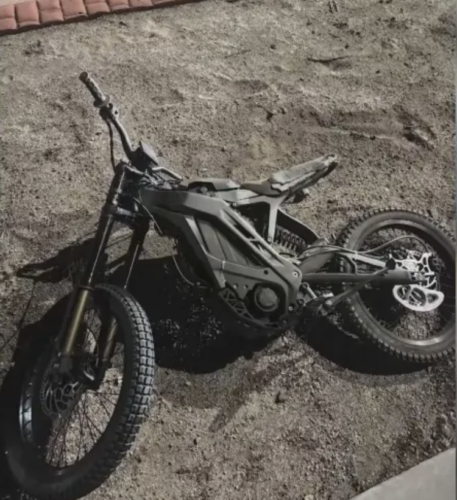
On October 20, 2026, the Orange County District Attorney charged the parents of 13-year-old Benson Nguyen with child endangerment. The Santa Ana teen died in a May 7 e-motorcycle crash in Garden Grove. Prosecutors say he was riding an E-Ride Pro SS 2.0 at 43 mph. California treats that vehicle as a motorcycle, so riding it on the street requires a motorcycle license, registration, and insurance. Learn more from a trusted e-moto accident lawyer.
By Pajman Jassim and Parisima Jassim, San Diego’s Trusted Personal Injury Lawyers | Jassim Law
What happened in the Garden Grove e-moto crash?
The crash happened on May 7, 2026, just before 10 p.m. Benson was riding his e-moto on Magnolia Street near Larson Avenue in Garden Grove. According to the Orange County District Attorney’s Office, witnesses saw him speeding, running red lights, and doing wheelies shortly before the crash. He then lost control, hit the raised center divider, and was thrown into a concrete light pole. Data from his family’s Life360 app showed he was traveling 43 mph. He was taken to UCI Medical Center, where he died.
Prosecutors say Benson had been injured repeatedly on a different electric vehicle, including a broken leg six months before his death. He also posted stunt videos on TikTok and Instagram.
What charges do the parents face?
The DA announced the charges on October 20, 2026 (Case #26WF4151):
- Vu Thanh Nguyen, father, 56: one felony count of child endangerment and one misdemeanor count of contributing to the delinquency of a minor. Prosecutors allege he bought his son a faster, more powerful e-moto despite repeated warnings. He faces up to six years in state prison.
- Hong Cuc Thi Nguyen, mother, 49: one misdemeanor count of child endangerment. She faces up to one year in county jail.
District Attorney Todd Spitzer said he has “no choice but to hold parents accountable.” These charges are allegations, and both parents are presumed innocent unless proven guilty.
Is an e-moto the same as an e-bike in California?
No, and that distinction drives this case. To count as an e-bike under California law, a vehicle must have:
- operable pedals,
- a motor of 750 watts or less, and
- a motor-only top speed of 20 mph.
Class 3 e-bikes also require riders to be 16 or older. Anything more powerful, faster, or without pedals is generally classified as a motor-driven cycle (Vehicle Code §405) or a motorcycle (§400). Riding one on public streets requires a motorcycle license, DMV registration, plates, insurance, and full motorcycle gear. Benson’s e-moto could reach 62 mph in “Sport” mode.
“Many families buy these vehicles thinking they’re upgraded bicycles,” says Pajman Jassim, co-founder of Jassim Law. “Legally, they’re motorcycles. A 13-year-old cannot lawfully ride one on a public street anywhere in California, and that includes San Diego.”
Can parents be held liable when a child crashes an e-moto?
Yes, in two separate ways.
Criminal liability can follow when parents knowingly let a child ride illegally. In May, the Orange County DA created its RIDE SAFELY unit. Since January, the office has charged 10 parents in e-moto cases. One of them is an involuntary manslaughter case after a 14-year-old hit and killed an 81-year-old Vietnam veteran in Lake Forest.
Civil liability is a separate question. Parents may be financially responsible for injuries their child causes, under theories such as negligent entrustment and California’s parental liability laws.
“When a minor on an illegal e-moto injures a pedestrian, cyclist, or driver, the parents who provided the vehicle can be part of the claim,” says Parisima Jassim, co-founder of Jassim Law. “Insurance is often the hardest part. Many homeowner’s policies exclude motorized vehicles, so it matters to identify every source of coverage early.”
What should you do if you’re hit by an e-bike or e-moto rider?
- Call 911 and get medical care, even if your injuries seem minor.
- Photograph the vehicle, the scene, and your injuries. Note whether the vehicle has pedals or a license plate.
- Get the rider’s name. If the rider is a minor, get a parent’s contact information.
- Find witnesses and nearby cameras quickly, because footage is often overwritten within days.
- Don’t give recorded statements to insurers before speaking with a lawyer.
How big is the e-bike and e-moto injury problem?
According to the DA, e-bike and e-moto injuries are now the leading reason Orange County children end up in the emergency room. Related injuries in Southern California have risen more than 430% in four years. Statewide crash data shows that children ages 11 to 14 account for 61.7% of e-moto crashes, even though riders under 16 are prohibited from using them.
Act Now! Talk to a San Diego e-bike and e-moto accident lawyer
Jassim Law represents people injured in e-bike, e-moto, motorcycle, and pedestrian crashes throughout San Diego County. If you or someone you love was hurt, contact Jassim Law for a free consultation with Pajman or Parisima Jassim. Serving San Diego and Southern California.
Frequently Asked Questions | E-Moto Accident Lawyer
Attorneys
JASSIM LAW
- Top 10.00 Avvo-rated attorney
- San Diego’s Best Attorneys
- Super Lawyers
- Member of San Diego, Los Angeles and Orange county bar associations